
Keynotes and Plenary Sessions
Recordings of Keynotes and panel discussions will be published soon.
7 September 2026 (Monday)
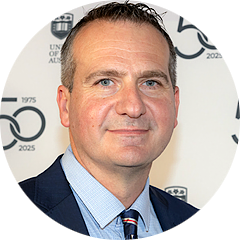
Sasha Nikolic
Co-Intelligence for Humanity: Learning with AI, Not from It
◯
As generative AI becomes embedded in everyday problem-solving, engineering education faces a defining question : How do we prepare engineers who can work with powerful technologies while remaining deeply human-centred, ethical, and socially responsible ? This keynote reframes AI not as a replacement for human intelligence, but as a collaborative tool serving humanity. This keynote introduces the CAC Co-Intelligence Framework, a practical model that guides both students and educators toward meaningful and responsible engagement with AI.
Participants will examine how students are already using AI in design, analysis, and learning, and why simply restricting or encouraging AI use is insufficient. Instead, the keynote offers a practical model for helping learners distinguish between constructive, human-advancing uses of AI and uses that undermine learning, agency, or ethical responsibility. Attendees will leave with actionable strategies for embedding co-intelligence into engineering curricula, ensuring graduates are not only technically proficient, but also prepared to design solutions for people, communities, and the planet.
⚫ ◯
Dr Sasha Nikolic is an Associate Professor at the University of Wollongong, holding a PhD in Engineering Education and a BE in Telecommunications. With a diverse background spanning industry roles in retail, electronics manufacturing, and IT, he transitioned to the university sector in 2006. He is the President of the Australasian Association for Engineering Education (AAEE) and a Senior Fellow of the Wollongong Academy of Tertiary Teaching and Learning Excellence. A Senior IEEE Member, Sasha has held prominent IEEE governance roles across the NSW Section, Education Society and the Australia Council.
Sasha is internationally recognised for his leadership in engineering education, receiving numerous accolades including Australian Awards for University Teaching Citations (2012, 2019), University of Wollongong Outstanding Contribution to Teaching and Learning Awards (2011, 2018, 2025), AAEE Awards (2019, 2023, 2025), the IEEE NSW Outstanding Volunteer Award (2024), the SEFI Best Paper Award (2024), and a IEEE Education Society Meritorious Service Award (2023). He has also contributed to impactful research on Generative AI and academic integrity, and champions laboratory learning as a space for developing uniquely human capabilities in an AI-enhanced education system.
A key focus of his recent work is the role of Generative Artificial Intelligence (GenAI) in reshaping education. Sasha leads collaborative, multi-institutional research that examines GenAI’s impact on academic integrity, curriculum design, assessment authenticity, ethics, and the evolving role of educators. His work highlights how GenAI is not only a technological disruptor but a catalyst for reimagining teaching and learning practices across engineering and higher education. Through the Australasian Artificial Intelligence in Engineering Education Centre (AAIEEC), which he founded and currently leads as President, Sasha coordinates national workshops, policy reviews, and research clusters that provide holistic oversight of the risks, opportunities, and human-centric competencies essential for thriving in AI-augmented learning environments. He is also a sought-after speaker and consultant on GenAI in education, offering research-driven insights through keynote addresses, professional development workshops, and strategy sessions for educators, institutions, and policymakers.
8 September 2026 (Tuesday)
Industry panel: What does it mean to be an AI-native engineer in a challenging world?
◯ ⚫
As generative and agentic AI rapidly reshape engineering practice, the role of the engineer is evolving beyond technical expertise alone. This panel explores what it means to be an AI-native engineer—a professional who can effectively collaborate with intelligent systems while addressing complex societal, environmental, and technological challenges. The discussion will focus on three interconnected themes:
1. Developing Human-in-the-Loop Competence and an Entrepreneurial Mindset for Responsible Engineering with Generative and Agentic AI
How can engineers leverage AI as a collaborative partner while maintaining human judgment, accountability, creativity, and ethical responsibility? What skills and mindsets are needed to innovate responsibly in AI-enabled environments?
2. Generative AI and Climate Change as Co-Disruptors of Industrial Practice: Are We Educating Engineers for the Skills These Transitions Demand?
As industries face simultaneous digital and sustainability transformations, what new competencies will engineers require? How should engineering education adapt to prepare graduates for a future shaped by both AI-driven innovation and climate imperatives?
3. Systems Thinking as the Meta-Competence of the GenAI Era
In an increasingly interconnected world, systems thinking is becoming essential for understanding complex interactions among technology, people, organizations, and the environment. How can engineers develop the holistic perspectives needed to design and manage AI-enabled systems responsibly and effectively?
The session will feature presentations from a diverse panel of industry leaders, academic experts, and student representatives, offering multiple perspectives on the opportunities and challenges of engineering in the age of AI.
Industry representatives
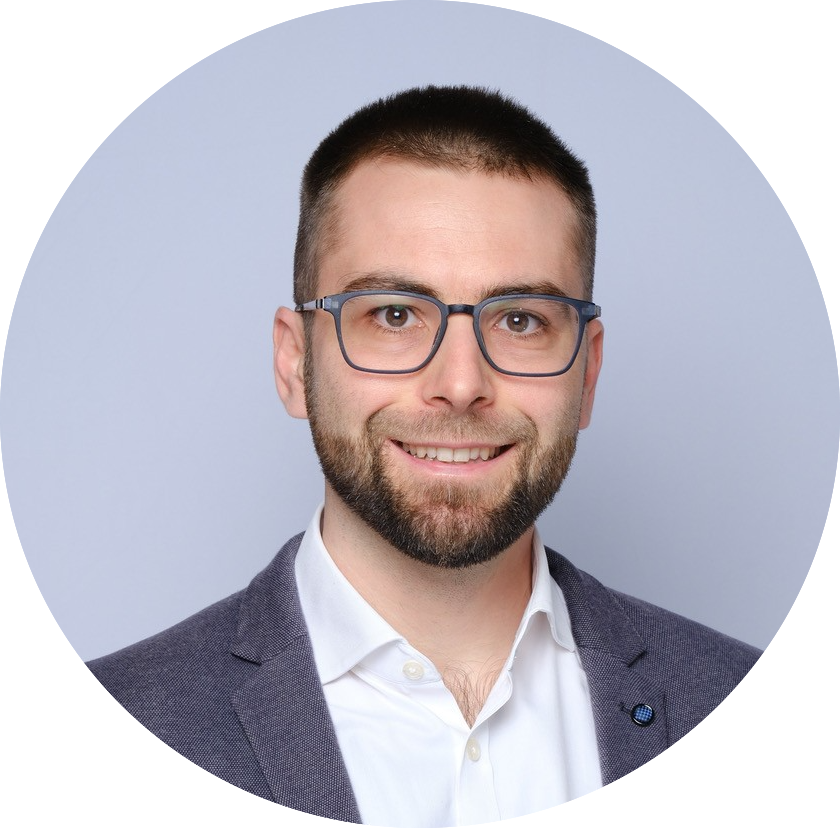
Nicolas Martin
Senior Manager, Academic Program, Ansys / part of Synopsys
⚫ ◯
Nicolas Martin holds a Master's degree and PhD in Materials Science and Engineering. He leads a technical team supporting academics worldwide across multiple areas of engineering physics in research and teaching. He is Secretary of the International Materials Education Symposium, held annually at the University of Cambridge. His current work focuses on the use of materials knowledge in circular engineering design and sustainable development, both in education and research.
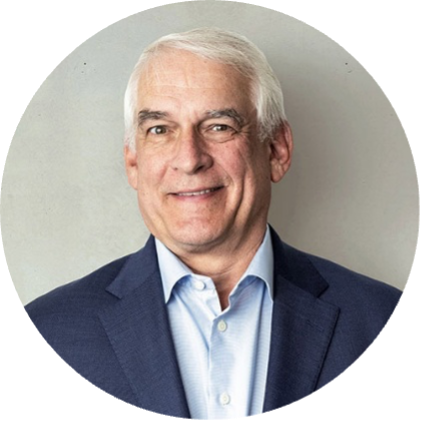
Chris Bradshaw
Chief Sustainability and Education Officer, Bentley Systems
⚫ ◯
Chris Bradshaw brings together Bentley Systems' sustainability and education initiatives with the objective of empowering Bentley's users to achieve sustainable and resilient outcomes, while ensuring that the next generation of engineers has the tools and knowledge needed to succeed.

Xavier Fouger
Senior Expert, Learning Centers & Programs, Dassault Systèmes – 3DEXPERIENCE Edu
⚫ ◯
Xavier Fouger is an industrial engineer and former Science Attaché at the French Embassy in Vienna. He joined Dassault Systèmes in 1990 and has since developed innovation and learning initiatives with industry, universities and educational institutions around the world.
He founded the company's organisation dedicated to academia and later created the Learning Lab, which evolved into 3DEXPERIENCE Edu. He now works on industry-inspired learning centres and educational programmes for governments and engineering education communities. Xavier is also a founding member of IFEES and GEDC, an expert for the French engineering accreditation agency CTI, and a Fellow of both ASEE and SEFI.

Tanya Morton
Global Director of Customer Success Engineering, MathWorks
⚫ ◯
Tanya Morton is Global Director of Customer Success Engineering at MathWorks, the makers of MATLAB and Simulink. She has worked at the forefront of innovation, engineering and science for over 30 years, including more than two decades in customer-facing roles at MathWorks.
She is passionate about sustainability and supports engineers and scientists working to understand and tackle climate change. Tanya holds an MA in Mathematics from the University of Oxford and a PhD in Mathematics and Computer Science from Vanderbilt University, where she focused on the mathematical foundations of AI.
Martin Koczmann
Academic Project Manager EMEA, Siemens Digital Industries Software
⚫ ◯
Martin Koczmann works in Global Future Workforce Engagement at Siemens Digital Industries Software, focusing on building the world's future workforce. He develops and supports global programmes that bridge the skills gap between education and industry, helping students and universities prepare for the changing needs of the engineering workforce and digital transformation.
Student representatives

Mauro Cimini
President, Board of European Students of Technology (BEST)
⚫ ◯
Mauro Cimini is an Electrical Engineering student at the University of Rome Tor Vergata and President of the XXXIX Board of BEST. He is actively involved in advocacy, external relations and initiatives supporting students' transition from higher education to the labour market.
Teodora Maric
Vice President of Education, European Students of Industrial Engineering and Management (ESTIEM)
⚫ ◯
Teodora Maric leads the strategic development of educational initiatives for a network of more than 8,000 Industrial Engineering and Management students across Europe. Alongside her role in ESTIEM, she is completing her Master's degree in Industrial Engineering and Management, specialising in Organisation and Management of Enterprises, at the Faculty of Technical Sciences, University of Novi Sad.
Academic representative
Claire Lucas
Executive Dean, School of Engineering and Innovation, Aston University
⚫ ◯
Professor Claire Lucas is Executive Dean of the School of Engineering and Innovation at Aston University and Professor of Engineering Education and Skills. She leads the School’s education, research and innovation strategy and has previously held academic leadership roles at King’s College London and the University of Warwick.
Her work focuses on professional skills development and workforce capability, particularly on how engineering curricula can prepare graduates for complex and interdisciplinary careers. She works closely with industry and professional organisations to strengthen the connection between university education, professional practice and future workforce needs.
Panel chair
Tatiana Vakhitova
Board of Directors, Co-lead of Corporate Committee, European Society for Engineering Education (SEFI)
⚫ ◯
Tatiana Vakhitova is a sustainability strategist with over a decade of experience in software product development and collaborative academic R&D, specialising in engineering teaching and research. She holds a PhD from the University of Cambridge Centre for Sustainable Development.
Her work has included the development of methodological frameworks and tools within Ansys Granta EduPack. Combining academic and commercial experience, she focuses on topics including design for sustainability, social life cycle assessment, circular economy and engineering education. Tatiana serves on the SEFI Board of Directors and co-leads SEFI's Corporate Committee.
9 September 2026 (Wednesday)
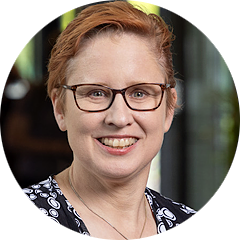
Gillian Saunders-Smits
Engineering Education not for, but by, through, and with Humanity – Practice as we Preach
◯
In our current VUCA world, we as humanity, regardless of our background or education, are on this world together, and therefore we must also work together to jointly face our volatile, uncertain, complex and ambiguous future and resolve challenges by optimally combining our respective talents, irrespective of who we are and where we come from.
Over the last two decades, an increasing awareness has arisen that no single (academic) discipline, including engineering, can work in isolation as a discipline or in isolation from the world in which academic disciplines operate. Once seen as unacademic or even unscientific, inter- cross- and transdisciplinary approaches are now taking center stage for humanity to tackle these challenges.
To be able to do so, not only requires mutual understanding of each other by those taking part, but it also requires additional (non-discipline specific) competencies and skills. As stated in the 2025 SEFI Skills position paper, these transferable and transdisciplinary competencies and skills give our future engineering graduates the tools to be able to apply their disciplinary knowledge and skills in these new settings and contribute their part to create a better world and all who are in it.
In her keynote, Gillian Saunders-Smits - experienced engineer, engineering educator, engineering education researcher, and lead editor of the SEFI Handbook on Teaching Transferable Competencies and Skills in Engineering – shares how - by, through, and with humanity – we, as educators, can better prepare our students with transferable competencies and skills for their future by practicing as we preach. She will do this by highlighting practical educational examples from across the globe, amassed in the handbook, a transdisciplinary, collaborative team effort of more than 140 authors from 5 continents.
At the keynote, Gillian together with her fellow lead editors Lynn Van den Broeck (KU Leuven) and Thies Johannsen (TU Berlin) will present the first copy of the SEFI handbook.
⚫ ◯
Gillian Saunders-Smits is a Senior Lecturer/Associate Professor at Delft University of Technology in the Netherlands with over 25 years of experience in teaching engineering (aerospace, mechanics, research methodology, and robotics) using active learning and an avid engineering education researcher. In addition, she has held various educational leadership roles developing bachelor, master and online programmes at TU Delft. Her current research focuses on competencies and skills for future engineers and their implementation in curricula using active learning. She is one of the lead editors of the SEFI Handbook on Teaching Transferable Competencies and Skills in Engineering that will be launched at the SEFI 2026 Annual Conference in Prague.
10 September 2026 (Thursday)
Discussion panel: From Cooperation to Transformation:
European University Alliances Reframing Engineering Education
⚫ ◯
European University Alliances are evolving beyond collaborative networks into powerful catalysts for institutional and educational transformation across Europe. Bringing together representatives of European University Alliances alongside experts in higher education policy, this panel will explore how these alliances are reshaping engineering education through joint programmes, innovative pedagogical approaches, enhanced mobility, and new models of cross-border collaboration. The discussion will examine both the opportunities and challenges associated with this transformation, while considering how alliances can strengthen the capacity of higher education institutions to prepare future engineers for the societal, technological, and sustainability challenges of the decades ahead. The panel will also reflect on the role of European policy in supporting the long-term development and impact of the European Universities Initiative.

Sonia Gomez Puente
Eindhoven University of Technology (EuroTeQ)
⚫ ◯
Sonia M. Gómez-Puente is a Strategic Advisor for Innovation in Teaching and Learning and Program Manager of the TU/e Academy of Teaching and Learning at Eindhoven University of Technology (TU/e). She has extensive experience in educational policy, curriculum development, and the design and implementation of educational innovation initiatives in higher education. Her research and professional interests include engineering education, academic staff development, curriculum design, coaching, and challenge-based learning. Through her research and educational practice, she contributes to advancing teaching excellence and fostering innovation in engineering and higher education.

Andrew Gunn
The University of Manchester
⚫ ◯
Andrew Gunn is a lecturer at the University of Manchester, United Kingdom. He is a higher education specialist and the author of two books: ‘Teaching Excellence?: Universities in an Age of Student Consumerism’, published by Sage, and ‘Public Policy and Universities: The Interplay of Knowledge and Power’, coauthored with Michael Mintrom of Monash University in Australia and published by Cambridge University Press. Prior to joining the University of Manchester, Andrew was based at the University of Leeds, United Kingdom, for many years where he completed his doctorate in the School of Politics and International Studies, before undertaking postdoctoral research in the School of Education. He has held numerous visiting positions at universities internationally, most notably being Worldwide Universities Network Visiting Researcher at the University of Auckland, New Zealand. Andrew is known for authoring the first academic publication on the European Universities Initiative, published in 2020, where he coined the phrase ‘network of networks’ to describe the distinctive structure of the alliances.
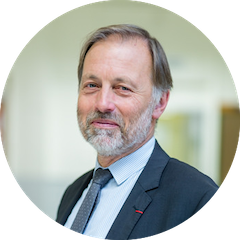
Christian Lerminaux
ParisTech (EELISA)
⚫ ◯
Christian Lerminiaux is President of ParisTech and Director of Chimie ParisTech – PSL. He previously served as Director of the University of Technology of Troyes (UTT), President of CDEFI – the Conference of French Engineering School Directors – and Executive Director of the French National Association for Research and Technology (ANRT).
Before moving into higher education leadership, he worked in industry at Corning, where he held senior research and technology management positions in optical technologies.
Throughout his career, Christian Lerminiaux has been closely involved in the development of engineering education, research and innovation, with a strong focus on cooperation between higher education institutions, industry and international partners. As President of ParisTech, he contributes to strategic collaboration among leading French engineering schools and to their engagement in European higher education.
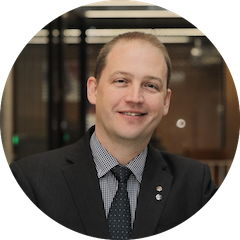
Euan Lindsay
Aalborg University
⚫ ◯
Professor Lindsay is the Professor of PBL and Digitalisation in Engineering Education at the Aalborg Centre for Problem Based Learning in Engineering Science and Sustainability (UCPBL). Euan's academic career has been spent at the frontiers of the discipline of engineering education. He is best known for his work in developing pioneering new models of engineering education that combine the authenticity of work- and problem-based learning with the flexibility of digitally enabled curricula. He has two decades’ experience in the digitalisation of engineering education, exploring what and how student engineers learn in digitally supported environments.
During his academic career, Euan has held a number of leadership roles in engineering education, serving as Dean, Head of School and Foundation Professor. He has been invited to give keynote presentations around the world, ranging from the UK to China to Bahrain. He is frequently invited to speak at panel sessions with themes like “Dangerous Ideas” or “Great Leaps Forward”. He serves on a number of advisory boards related to innovation and quality assurance in Engineering education, and is a Fellow of both Engineers Australia and the UK Higher Education Academy.
Euan believes most major challenges facing society today can be solved by engineers, including providing clean drinking water, energy sustainability or communications technology to keep people connected. He is excited about developing new engineering programs with a focus on making a difference, not just solving problems and making things, and hopes to inspire students to move forward in their careers with passion.
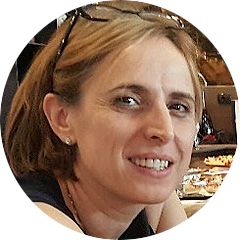
Monica Riva
Politecnico di Milano (ENHANCE)
⚫ ◯
Full Professor at the Department of Civil and Environmental Engineering, Politecnico di Milano, where she also serves as Rector’s Delegate for International Networks and Head of the PhD Programme in Environmental and Infrastructure Engineering. In 2025 she was elected to the European Academy of Sciences and Arts (EASA), and in 2026 she was appointed Dean of Class IV (Natural Sciences) of EASA. She has held leadership positions within the European Geosciences Union, the International Society for Porous Media (InterPore), the ENHANCE European Universities Alliance, and the T.I.M.E. (Top International Managers in Engineering) Association.
Her research focuses on groundwater hydrology, stochastic hydrogeology, porous media, uncertainty quantification, and sustainable management of water resources under changing environmental and climatic conditions. She has made pioneering contributions to the development of theoretical and computational methods for modeling groundwater flow and transport in heterogeneous porous media, with applications ranging from groundwater protection and contaminant transport to environmental risk assessment, water quality, and energy-related subsurface processes. Her recent work also addresses multiscale hydrological modeling, groundwater-surface water interactions, and nanoscale characterization of the time-space evolution of mineral surfaces under reactive transport conditions.
Prof. Riva has led numerous national and European research projects. She is founder and scientific leader of the MIPORE (Porous Media across Scales@Polimi, www.mipore.polimi.it ) research group, effectively promoting an international and interdisciplinary research environment.
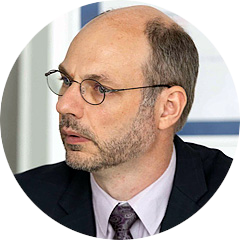
Timothée Toury
Université de technologie de Troyes (EUT+)
⚫ ◯
Timothée Toury is Secretary General and founding architect of the European University of Technology Alliance. An Associate Professor at Université de technologie de Troyes (FR), he is a graduate of ENS Paris and Paris-Saclay. He has authored over 45 peer-reviewed publications, patents, and book chapters, is editor of a journal and has led seven European research and innovation projects. He serves on the board of the French quality assurance agency CTI and acts as an expert advisor to international bodies on university governance and pedagogical reform.